
How to Check Criminal History in Orange County
No single official screen contains every Orange County criminal record. North Carolina eCourts Portal is the best first stop for a public court case, but it does not replace an arrest report, current jail confirmation, or the fingerprint-linked SBI record available to the subject. Gather the full name, spelling variants, an approximate event date, and any case, citation, report, or booking number. A birth date can help distinguish people, though public results may not show every identifier.
Work from the broad court search toward the office that created each record. Compare the county, division, charge, filing date, and party role before assuming a match. For older files and documents that cannot be viewed remotely, the Orange County Clerk of Superior Court is the authoritative county fallback.
- Search North Carolina eCourts Portal by party name or record number, then narrow the location to Orange County.
- Open likely matches and compare case number, court division, filing date, charges, hearings, status, and disposition.
- Call the Clerk criminal division at 919-644-4500 for older records, remote omissions, or a certified result.
- Ask the responding police department or Sheriff for its incident, arrest, warrant-execution, or booking record.
- Call the Detention Center for local custody, or use NCDAC Public Offender Information for state custody and supervision.
- Use the SBI Right to Review for a fingerprint-linked review of your own North Carolina record.
The record path is Police or Sheriff report → detention booking when applicable → District or Superior Court case → SBI repository reporting. Each layer answers a different question.
Orange County eCourts Record Search
North Carolina completed statewide eCourts deployment in October 2025. Orange County cases now use Enterprise Justice. Smart Search accepts a party name, record number, citation number, cross-reference number, nickname, and other supported criteria. Advanced filters keep a common name from returning a broad statewide list.
| Portal field | Use | Required |
|---|---|---|
| Search Criteria | Party name, case number, citation, or listed identifier | Yes |
| Location | Choose Orange County or the known court location | No |
| Case Category | Narrow to criminal or infraction matters | No |
| Date Filed | Set a filing window for known events | No |
| Hearings | Search by party, case, judge, date, or courtroom | No |
A result can show the record number, parties, charges, events, hearings, disposition, and some public documents. Protected material and older paper files may not appear. Remote omission does not prove that a document does not exist.
Official North Carolina Background Checks
The official path depends on whose record is reviewed and what proof is needed. Anyone may inspect public eCourts data. A certified Orange County criminal-record search from the Clerk costs $25 and covers public court records in that county. It is name-based, not the statewide fingerprint-linked history held by the North Carolina State Bureau of Investigation.
For your own state record, the SBI Right to Review requires its form, a legible FD-258 fingerprint card, and $14 by certified check or money order. Cash, cards, and personal checks are not accepted. The FBI offers a separate $18 Identity History Summary for the subject's federal fingerprint history. SBI warns that name searches are less exact than fingerprints.
Local fingerprint service is not assured. Chapel Hill Police limits appointments to listed programs, and research did not confirm a universal Orange County walk-in service or fee. Call the Sheriff at 919-245-2900 before traveling.
Orange County Criminal Records Hub
The Orange County Courthouse at 106 E. Margaret Lane in Hillsborough is the main local records hub. The Clerk keeps both District and Superior Court criminal files. District Court hears misdemeanors and early felony matters; Superior Court is the felony trial court. The criminal counter is open weekdays from 8:30 a.m. to 5 p.m. Its email is orange.criminal@nccourts.org.
The Judicial Branch courthouse page shows the facility and visitor rules.
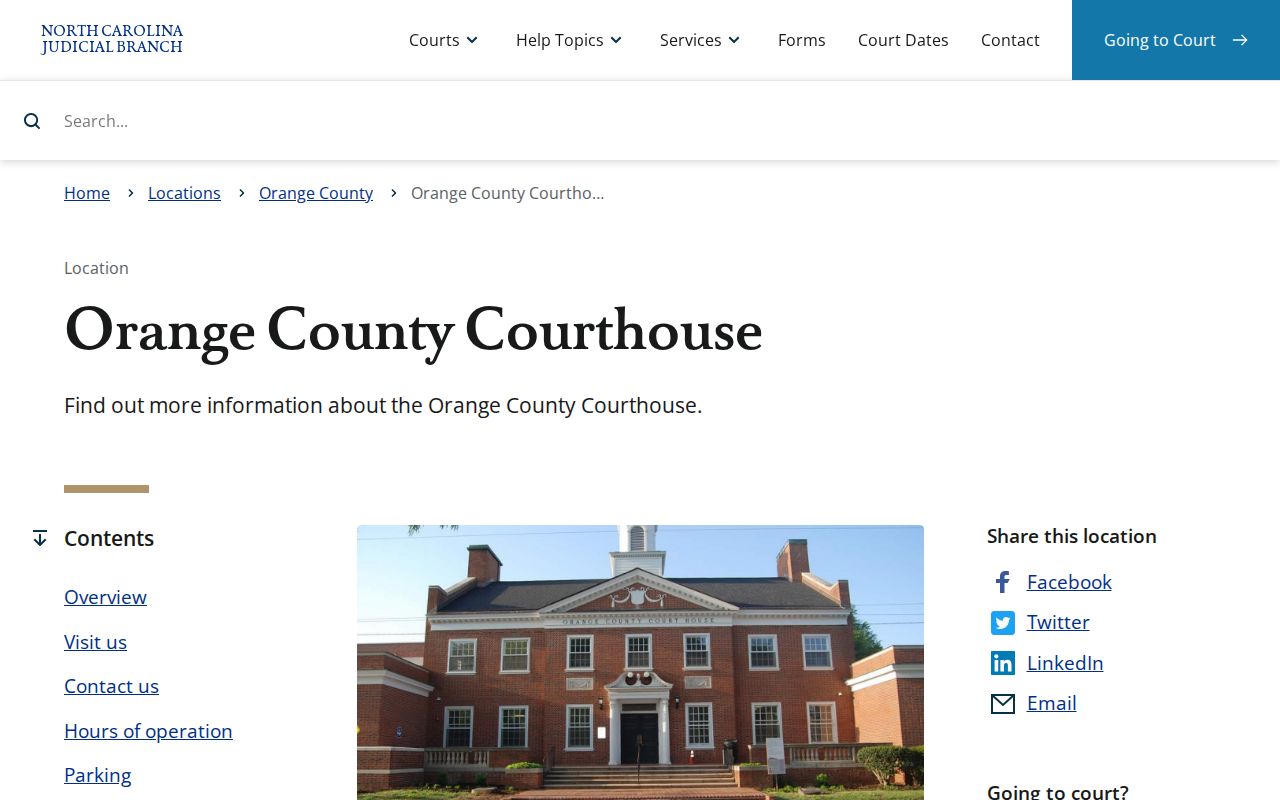
The listing matters because the 1954 Courthouse/Justice Center differs from the Historical Courthouse and Chapel Hill Courthouse. Current criminal case research should begin at Margaret Lane or eCourts. Bags and purses are not allowed. Free three-hour parking is available on East Margaret Lane, and accommodations should be arranged through the Judicial Branch.
Types of Criminal Records
Orange County criminal records are split by event and custodian. A police incident report describes a call and public event facts. An arrest record documents agency action, while a Detention Center booking record follows a jail intake. The Clerk's case file records charges as they change, hearings, pleas, orders, outcome, and sentence. The SBI repository links fingerprint-supported arrest cycles to reported court outcomes.
Warrants and orders for arrest are court process served or tracked by law enforcement. No complete public active-warrant database was verified for Orange County. Court process questions go to the Clerk at 919-644-4500, magistrate questions to 919-644-4690, and Sheriff-held process questions to 919-245-2900. Seek case-specific legal help when trying to resolve active process.
- Police and arrest files: Request them from OCSO, Chapel Hill, Carrboro, Hillsborough, UNC Police, or the responding agency.
- Booking and custody files: The Orange County Detention Center creates the county jail record.
- Court case files: The Clerk maintains District and Superior Court dockets and documents.
- Prison and supervision files: NCDAC holds state prison, probation, parole, and post-release data.
- Registry files: The Sheriff collects local data, and SBI publishes the permitted statewide subset.
- Restricted files: Juvenile and expunged records are outside ordinary public access.
Felonies range from Class A through I, and misdemeanors from Class A1 through 3. A search-result class does not calculate a sentence. The final judgment, offense date, prior-record level, and applicable sentencing table control.
Orange County Jail Record Fallback
Orange County does not publish a dependable official web roster or conventional booking log. Avoid unofficial mugshot pages. For present custody, call the Orange County Detention Center at 919-245-2940 with the full legal name and, when known, birth date and approximate booking time. The facility at 1200 U.S. 70 West opened in April 2022 and has a designed capacity of 144 beds.
Use NextRequest for targeted booking information, then check eCourts for the related charge and hearing. Those records can lag each other. If a sentenced person left county custody, use NCDAC Public Offender Information for state prison, probation, parole, or post-release status. County jail and state prison are separate searches.
Probation is state-run through NCDAC Community Supervision, not an Orange County department. A court judgment shows the sentence, while NCDAC may show public supervision history. Detailed officer notes, treatment records, and safety plans are not public locator fields.
Note: A booking charge records what reached intake; only the later court disposition shows how that charge ended.
What an Orange County Criminal Record Shows
An SBI rap sheet centers on identity, fingerprint-linked arrest cycles, contributing agencies, charges, and reported dispositions. An Orange County court file centers on one docket. A booking file centers on one jail stay. Never assume that fields from one product must appear in another.
| Name & Identifiers | Names, aliases, demographic details, and SBI or FBI identifiers where permitted. |
|---|---|
| Arrest / Booking Data | Event date, contributing agency, intake time, charge, bond, release, and transaction details. |
| Charges & Statutes | Offense text, counts, citations, class, charge status, and later amendments. |
| Disposition | Dismissal, acquittal, plea, verdict, PJC, or another outcome by count. |
| Sentence | Custody, probation, restitution, costs, and other terms in the judgment. |
| Custody / Supervision | County release data or selected NCDAC prison and community-supervision history. |
A missing disposition can reflect delay, identity matching trouble, an older paper file, or an arrest cycle that was not linked. Compare the court file with your SBI Right to Review, then use the correction instructions supplied with the response.
- Disposition
- The outcome of a charge or case, not merely its current calendar status.
- Prayer for Judgment Continued
- A North Carolina result in which judgment is continued; it is not a universal erasure.
- Order for arrest
- Judicial process directing arrest, often after failure to appear or comply.
- Post-release supervision
- Supervision after certain prison terms, distinct from parole under older law.
Orange County Record Request Costs
When a county record is not online, begin with the Orange County request instructions. NextRequest asks for a clear description, department, date range, identifiers, contact details, desired format, and optional attachments. Submit once and track the status. A person without email may use the portal or contact Community Relations at 919-245-2302.
The county production policy publishes its July 2024 fee rules.
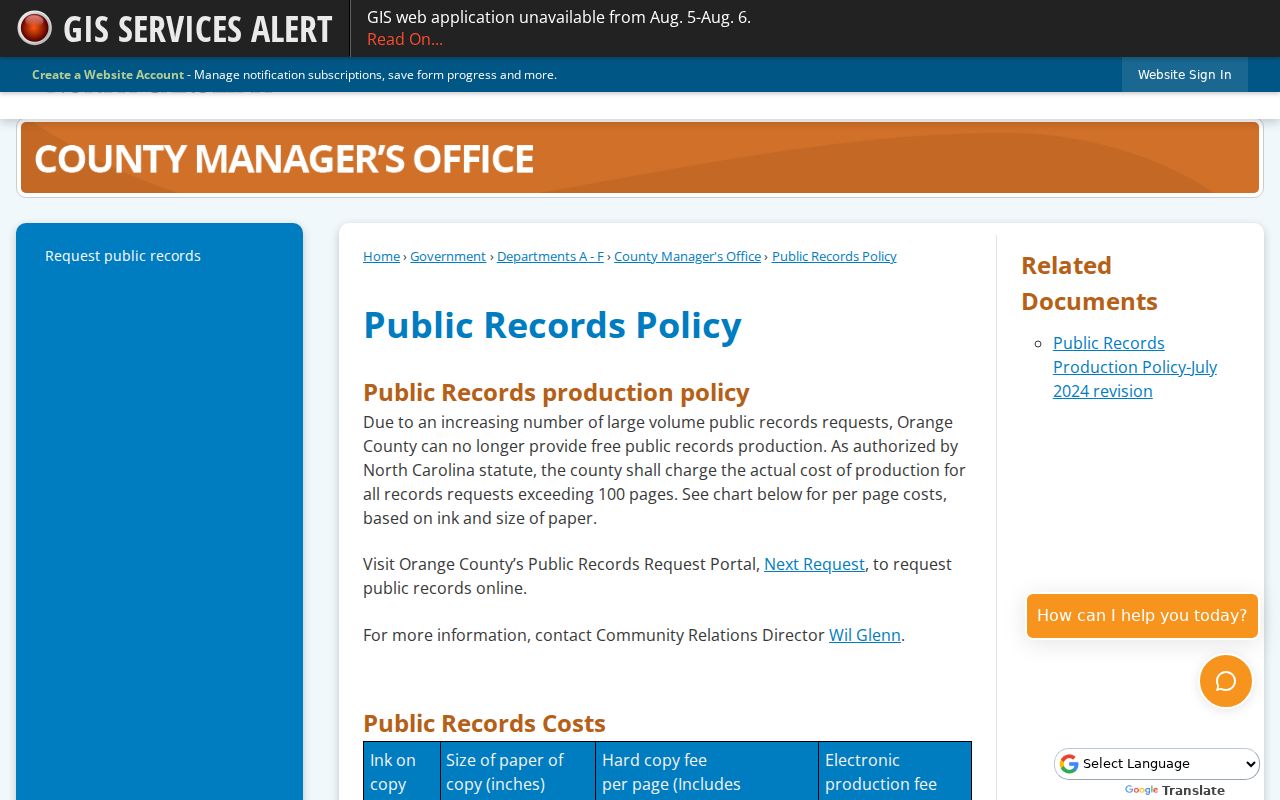
Charges apply once production exceeds 100 pages. Black hard-copy pages cost $0.05, $0.06, or $0.07 based on size. Color costs $0.10, $0.11, or $0.12, and electronic production is $0.02 per page for the listed formats. Ask for an estimate because extensive technology or staff work can support a special service charge.
Send the request to the actual custodian. The Sheriff holds its arrest, booking, jail, and warrant-execution files. Town police hold their own incident reports. The Clerk holds judgments. NextRequest can route county requests, but it cannot make the county custodian of town records.
Public Access Laws
North Carolina Public Records Law starts from access to records made or received in public business, but other laws protect specific content. A requester usually need not state a purpose. The request must reasonably identify an existing record, and a custodian need not answer questions or create a new compilation. Orange County criminal investigation files have a key split: working material is generally protected, while listed incident and arrest facts remain public.
Key North Carolina statutes:
G.S. 132-1 defines public records, subject to confidentiality laws.
G.S. 132-6 provides inspection and copies at reasonable times as promptly as possible.
G.S. 132-1.4 protects investigation files but releases specified event and arrest facts.
G.S. 132-1.4A gives police recordings a special disclosure and release process.
G.S. 7A-109 opens clerk records unless another law restricts them.
Public facts may include the event time, place, nature, alleged violation, basic identifying facts, and arrest circumstances. Victim and witness details, juvenile data, medical information, and active investigative work may be redacted. Body-camera footage is not an ordinary public record.
Orange County Pretrial Record Trail
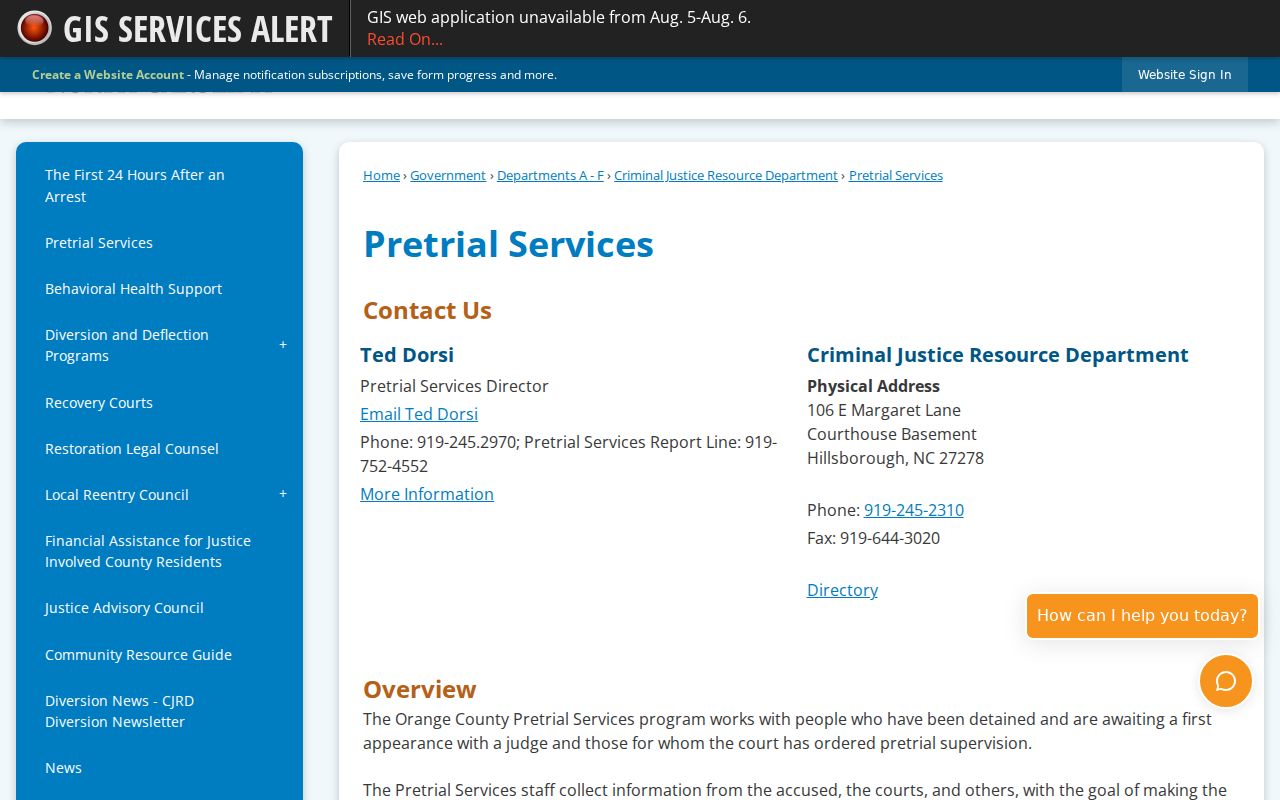
The Criminal Justice Resource Department occupies the courthouse basement and coordinates Pretrial Services, behavioral-health work, diversion, restoration, transportation help, and debt support. Pretrial staff gather information for first appearances and supervise qualifying participants. County materials report daily first appearances at 2 p.m. in Courtroom 3. The CJRD overview identifies the local program network.
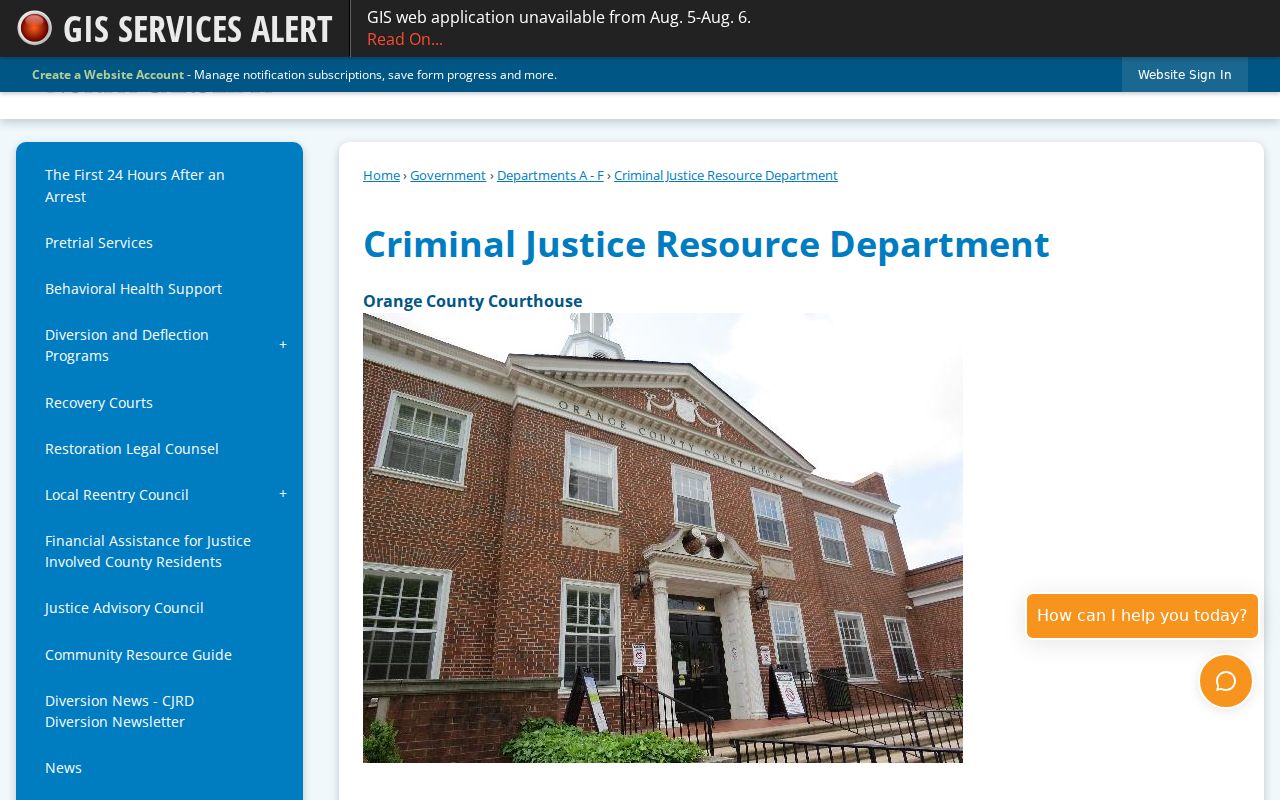
These programs affect how a case moves through custody, court, and supervision. They do not erase a police report, docket event, or court order that already exists. The Pretrial Services page documents the first-appearance work.
People who missed court have an unusual local route. CJRD says a person seeking a failure-to-appear strike order reports to the Clerk from 8:30 to 9 a.m. Thursday for a 9 a.m. hearing. Confirm current eligibility. Do not assume that appearing clears an active warrant.
Sealed, Expunged & Restricted
North Carolina uses the term expunction. It is a court process that removes qualifying records from ordinary public access. There is no single waiting period or form for every case. Routes cover certain youthful or nonviolent convictions, dismissed charges, not-guilty findings, specified drug matters, and identity-theft cases. Eligibility depends on the offense, outcome, age, prior record, exclusions, and current statute.
File in the county and court of the case using the proper AOC form. The Orange County Clerk can confirm the current form and fee, which research did not establish as one fixed amount. Once an order is entered, notice goes to agencies under statute. Updates across court, police, and repository systems may take time.
Juvenile records are confidential under G.S. 7B-3001 and often require consent, an official purpose, or court order. Active investigations, victim or witness identifiers, medical data, security plans, protected account numbers, and camera recordings are not routine public downloads. G.S. 15A-151 also restricts expunged-case disclosure while preserving specified official access.
Orange County Expunction Record Help
Orange County offers a rare local resource for people reviewing their own record. Restoration Legal Counsel gives qualifying residents pro bono help with expunctions, certificates of relief, driver's-license restoration, and criminal-justice debt. A certificate of relief can reduce some collateral effects, but it does not erase a conviction. The Restoration Legal Counsel page provides referral information.
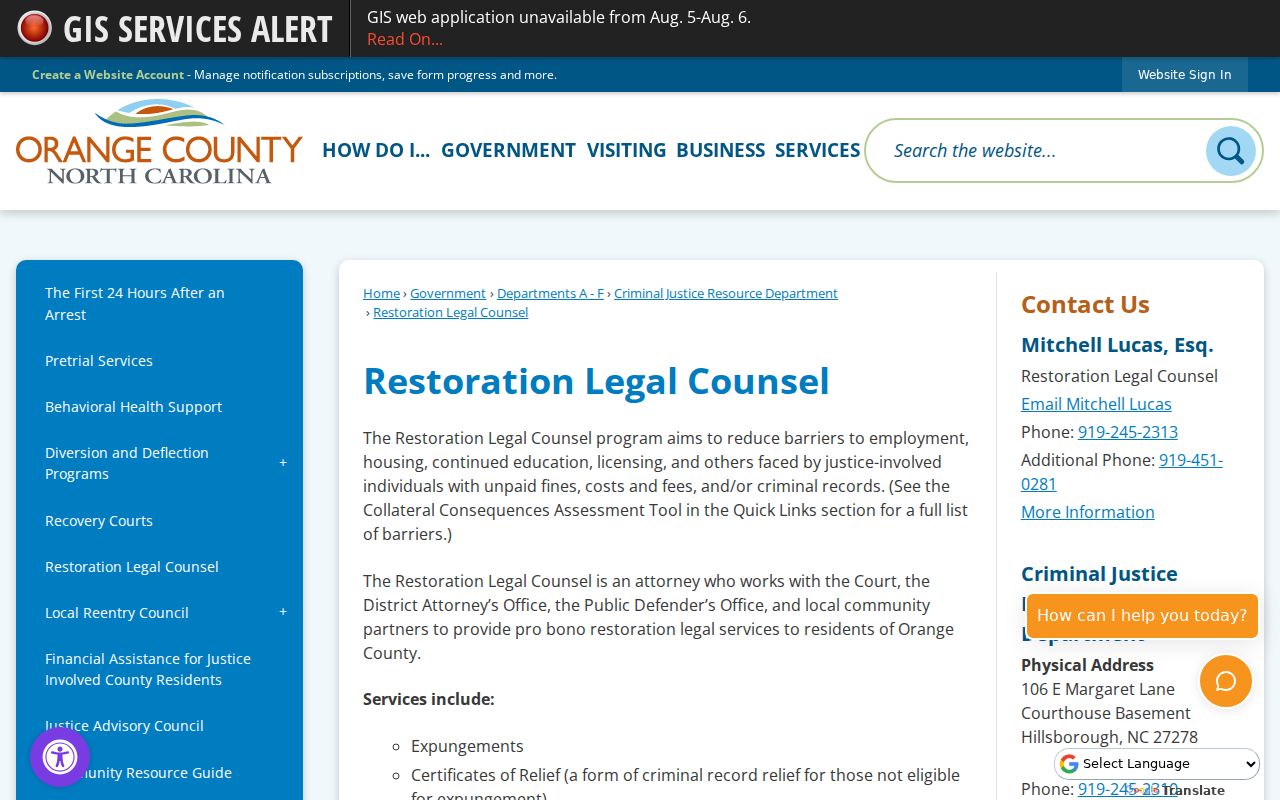
The program coordinates with the Court, District Attorney, Public Defender, and community partners. Bring the docket number, charge, disposition, and any prior order so counsel can identify the exact record and current remedy. Adult Pre-Arrest Diversion offers another route for eligible adults with no prior criminal history who face specified low-level misdemeanor conduct. An officer still creates an incident report and referral even when the process avoids a citation or formal arrest. The OC-PAD page documents that process.
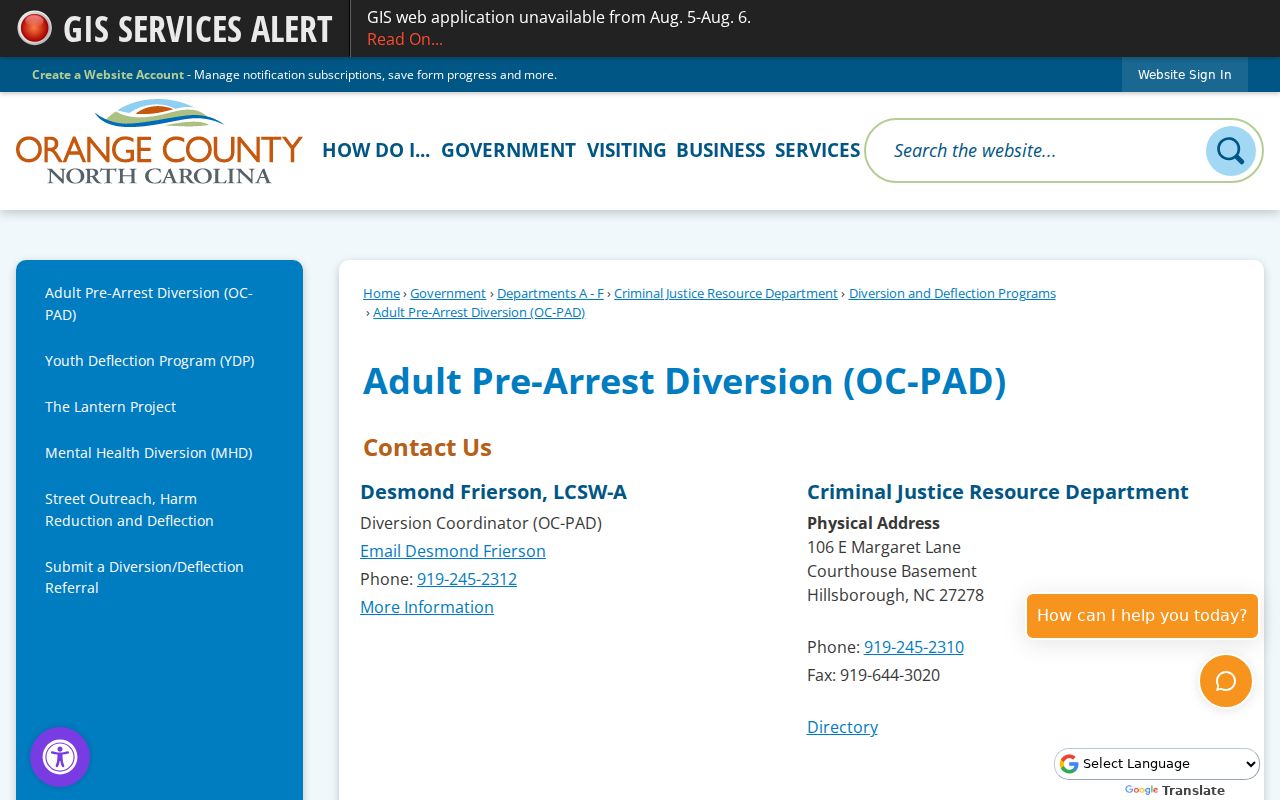
Diversion does not mean no record of the event. It changes the formal arrest and charging path for a qualifying referral while leaving the agency incident record.
Criminal Records by City in Orange County
Chapel Hill, Carrboro, and Hillsborough are Orange County's three most populous incorporated places. Their police departments keep separate incident and arrest reports, but none runs a separate municipal criminal trial database. Charges flow into North Carolina District or Superior Court. Use the event location and responding agency, not just a mailing address, to choose the correct local custodian.
Chapel Hill Criminal History
CHPD has a Report Center and local arrest check, while UNC Police is a separate campus custodian.
Carrboro Criminal History
Carrboro offers Police2Citizen, counter pickup, and phone-requested email delivery.
Hillsborough Criminal History
Town police hold incident reports; the Sheriff, jail, and Clerk remain distinct county custodians.
Part of Chapel Hill lies in Durham County, and the UNC campus has its own police force. Carrboro adjoins Chapel Hill but keeps separate files. Hillsborough is the county seat, yet town police records do not merge with Sheriff records merely because the offices are close.
Orange County Police Record Boundaries
Police reports are not pooled in one Orange County system. Chapel Hill's Report Center publishes some incident and arrest reports, while its Local Arrest Records Check covers only CHPD arrests within town limits. It excludes UNC Police, Carrboro, Hillsborough, OCSO, and other counties. Carrboro normally makes reviewed reports available within 24 to 48 hours through Police2Citizen, counter pickup, or email requested by phone.
Hillsborough routes accident and incident requests through its police contact form. UNC Police owns campus records. A Chapel Hill postal address can point to CHPD, UNC Police, or even a Durham County event. The incident place and report agency are safer guides.
The Orange County court contact directory identifies the Clerk, magistrates, District Attorney, and other case contacts.
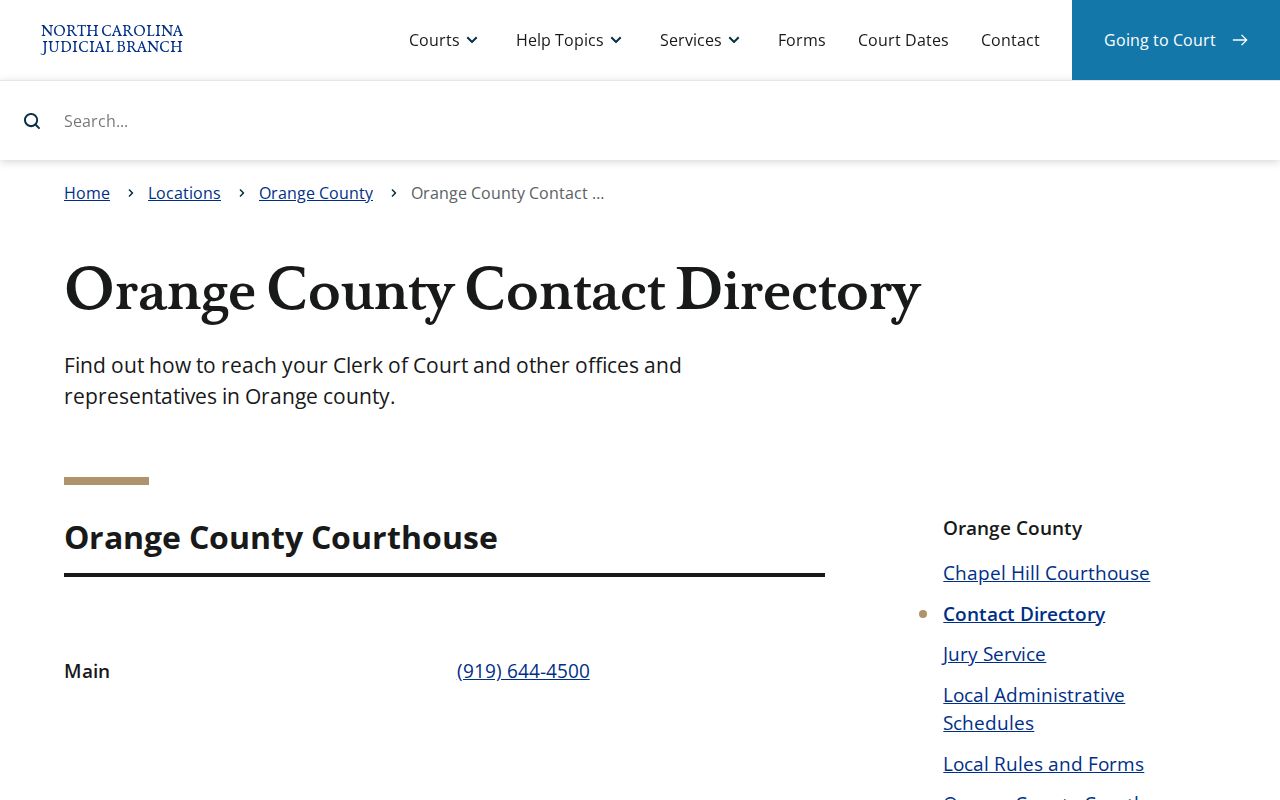
The directory completes the chain when a police record becomes a court case. Use police data for the event and arrest, detention for current custody, and the Clerk for the filed charge and outcome. Calls, incidents, offenses, arrests, and convictions are not interchangeable counts.