
How to Check Criminal History in Chapel Hill
Begin with the place and agency, not just a Chapel Hill mailing address. The Chapel Hill Police Department keeps town police incident and arrest reports. UNC Police separately keeps records for events on university property. Once a charge reaches court, the Orange County Clerk of Superior Court maintains the District or Superior Court case. Current public case information may appear in the North Carolina eCourts Portal. Present custody is a separate question for the Orange County Detention Center. This layered route keeps a police report, a booking record, and a judgment from being mistaken for one complete file.
- Confirm whether Chapel Hill Police, UNC Police, or another agency handled the event.
- Use the town Report Center or ask the correct records unit for the incident or arrest report.
- Search eCourts by name or case number, narrowed to Orange County and criminal matters.
- Call the Orange County Detention Center for current custody, release, and booking information.
- Use an SBI fingerprint Right to Review when checking your own full North Carolina repository record.
A Chapel Hill police report is strongest for the initial facts and agency action. The court file is the source for charges as filed, hearings, pleas, dismissals, and judgment. For broader county process, the Orange County criminal history overview explains how those layers connect.
Chapel Hill Criminal Report Center
Chapel Hill publishes an official Report Center for incident and arrest reports, but the town warns that not every report appears there. Searchers should keep the event date, location, report number, and involved name ready. If the online result is absent, the Records Division remains the fallback. A missing web entry does not show that the event never occurred. Publication may depend on report status, review, redaction, and whether the record is suitable for remote display.
The town's official report page shows where Chapel Hill residents can file certain nonemergency matters and reach the report interface.
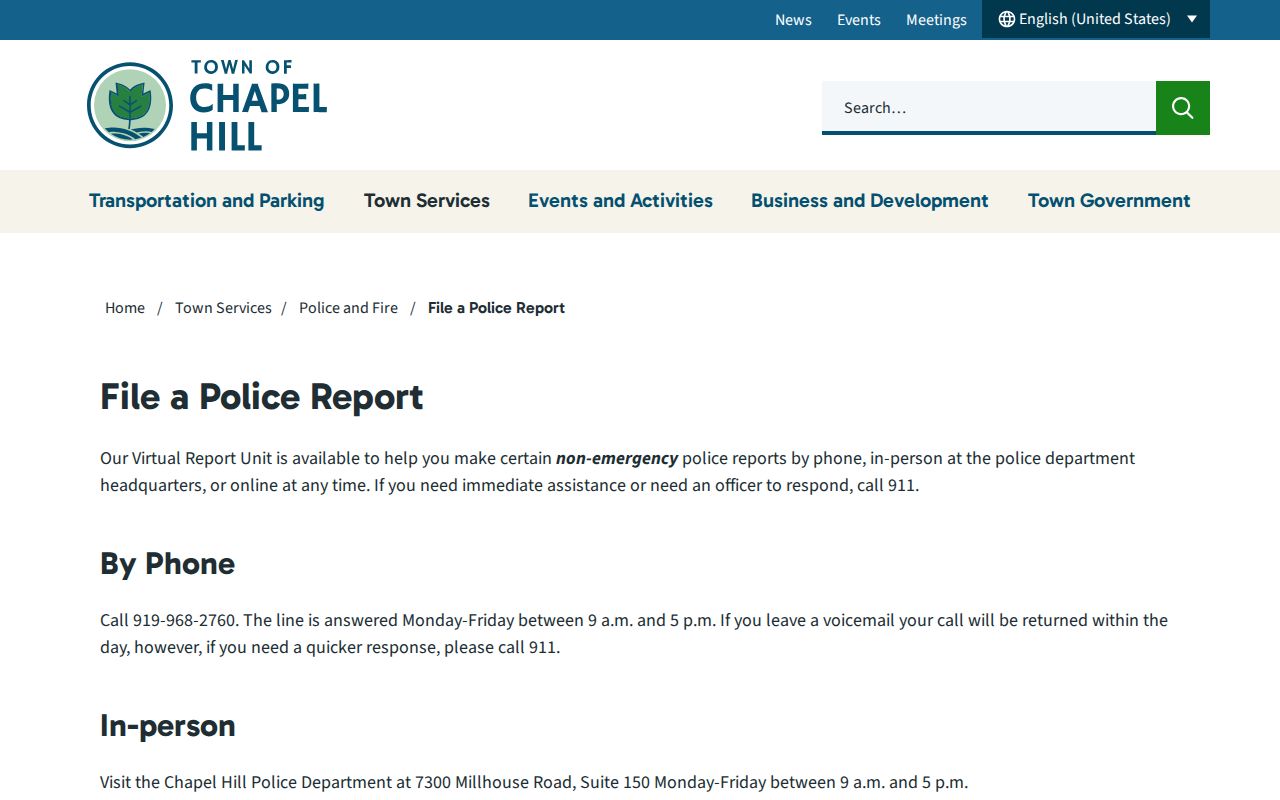
The captured page helps separate two tasks: filing a new report and finding an existing Chapel Hill police record. Those paths may begin together online, but a filed report still must be reviewed before a final record and case number are returned.
The Chapel Hill Police Department
The Chapel Hill Police Records Division answers record questions at 919-968-2760 or 919-968-2846, Monday through Friday from 8:30 a.m. to 5 p.m. Email requests can go to Records-Police@townofchapelhill.org. Town public-record coordination also runs through the Clerk at 919-968-2743 and allclerk@townofchapelhill.org. These contacts serve different functions, so a request should name the report type, approximate event date and time, location, and report number when known. That detail lets staff identify an existing record rather than asking the town to create a new summary.
The town's police contact page is the best place to verify the current Chapel Hill Records Division location before travel. Its police services and permits page supplies the official local-arrest-check route.
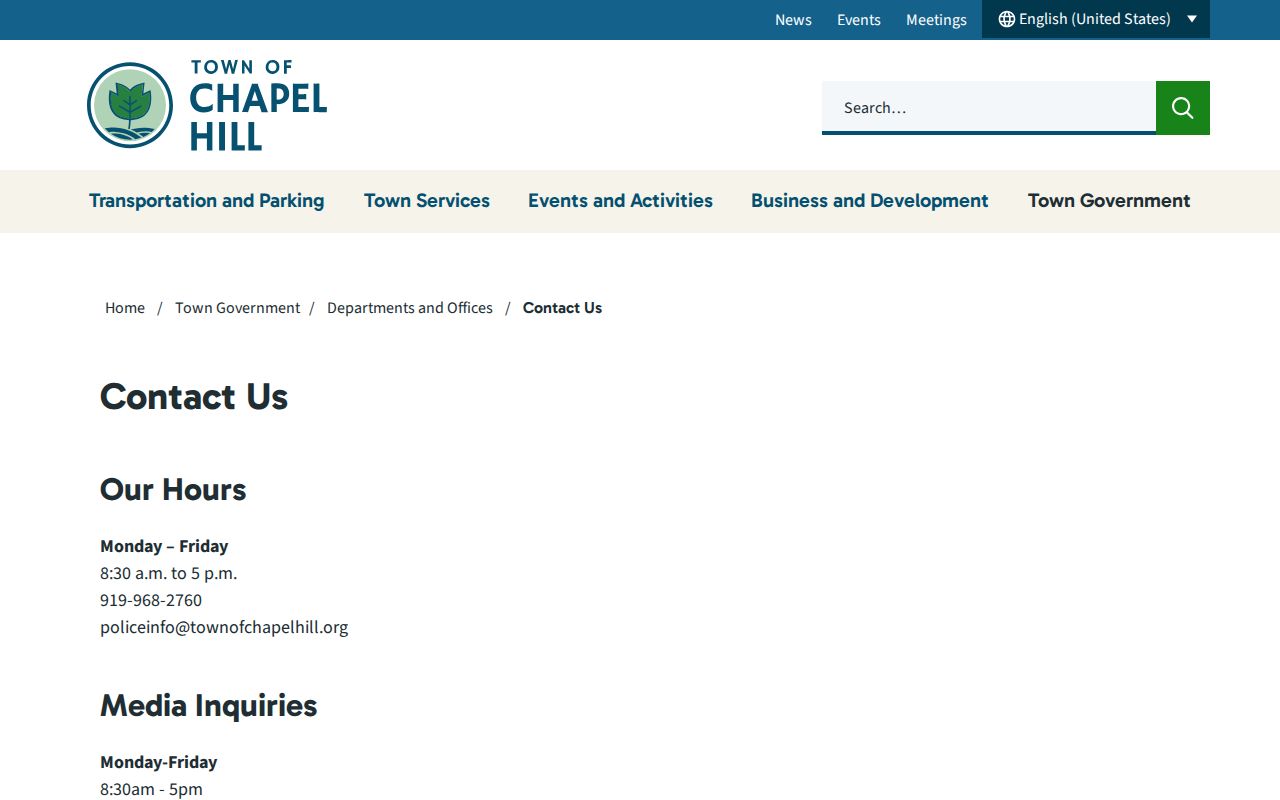
That location check matters because Chapel Hill police and municipal functions have moved among addresses. The live Virtual Report Unit page currently directs in-person report filing to 7300 Millhouse Road, Suite 150, rather than the town's general offices.
Chapel Hill Criminal Records Jurisdiction
A Chapel Hill address can point to more than one records custodian. UNC Police handles events on UNC-Chapel Hill property from the Public Safety Building at 285 Manning Drive. Its general number is 919-962-8100 and dispatch is 919-962-3951. Chapel Hill Police handles town matters within its jurisdiction. Part of the municipality also extends into Durham County, which makes the event county relevant when searching court files. The responding officer's agency, report header, or event location usually gives a better lead than postal wording.
This boundary has a practical consequence. A town Report Center search will not stand in for a UNC Police request, and an Orange County court filter may miss a matter filed in Durham County. If the first search fails, confirm both the police agency and county before changing spellings or assuming there is no record. For events handled by UNC Police, use the university's official police channel. For CHPD matters, return to the town Records Division.
Note: “Chapel Hill area” describes a community, not a single police database or court-record jurisdiction.
Arrests and Bookings in Chapel Hill
CHPD creates the arrest record when its officers make an arrest. If the person enters county custody, the Orange County Sheriff's Office creates a separate booking file at the Orange County Detention Center, 1200 U.S. 70 West in Hillsborough. The detention information line is 919-245-2940. Orange County does not publish a dependable official web jail roster, so current custody should be checked by phone using the person's full legal name and, when available, date of birth and approximate arrest time.
Booking can add intake time, charge descriptions, process identifiers, bond or release conditions, and custody status. It does not replace the CHPD incident narrative. Nor does it show the final case result. Charges can change, be dismissed, or be resolved under a different description. The Orange County arrest history resource covers the countywide agency and detention fallback chain in more depth.
Chapel Hill Local Arrest Check
CHPD offers a Local Arrest Records Check, but its boundary is narrow. It covers arrests made by Chapel Hill Police within town limits. It is not an Orange County criminal record search. It omits UNC Police, Carrboro Police, Hillsborough Police, the Orange County Sheriff's Office, other North Carolina counties, and events that did not produce a CHPD arrest. It also should not be read as a final case disposition.
Use the local check when the question is specifically whether CHPD recorded a Chapel Hill arrest. Use eCourts and the Orange County Clerk when the goal is to follow a criminal case. A certified county search through the Clerk costs $25 under Judicial Branch guidance. For your own fingerprint-linked state record, the SBI Right to Review is the distinct official route and has a $14 state-only fee. Each product answers a different scope of question.
Scope check: A CHPD local arrest result establishes police action within the town limit. It does not establish guilt or a complete statewide history.
Chapel Hill Municipal Court Records
Chapel Hill has no separate municipal criminal court database. North Carolina's unified court system handles town ordinance, traffic, misdemeanor, and felony matters through District and Superior Court as the law assigns them. Eligible traffic payments may be handled through a magistrate office in the Chapel Hill Police building, but criminal case searches still run through eCourts or the Orange County Clerk. The Chapel Hill Courthouse is an additional local state-court venue, while the main criminal clerk operation is based in Hillsborough.
| Court Name | North Carolina District and Superior Courts serving Orange County, with sessions at designated Orange County venues. |
|---|---|
| Case Types Heard | District Court handles misdemeanors, infractions, and early felony proceedings; Superior Court hears felony trials. |
| Case Lookup Channel | North Carolina eCourts Portal, then the Orange County Clerk criminal division at 919-644-4500. |
| What the Docket Shows | Case number, charge and status, events, hearings, parties, disposition, judgment, and public documents when remotely available. |
| Copies & Fees | A certified county criminal-record search is $25; document and certification charges depend on the current court fee schedule. |
The official Chapel Hill Courthouse page provides the current location and service details.
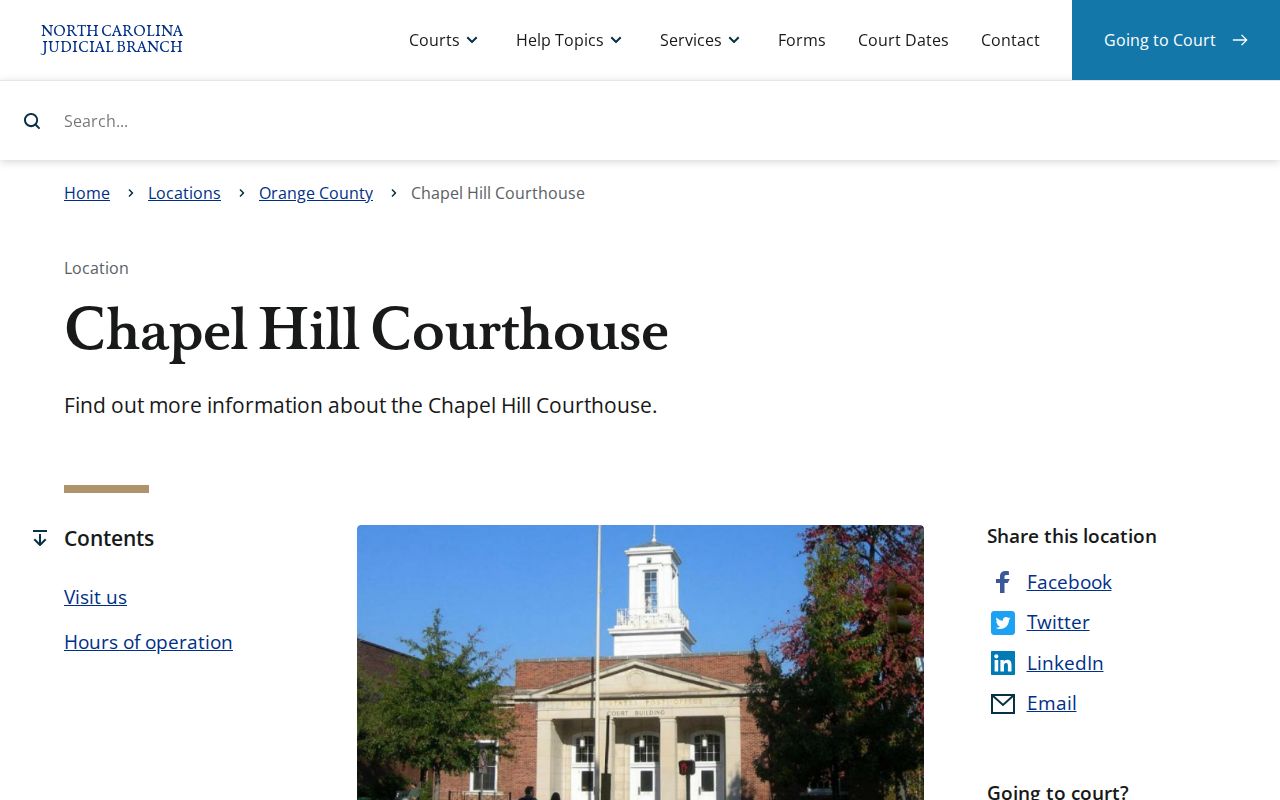
The image confirms that Chapel Hill has a local courthouse channel without turning that venue into a separate town court system. The Orange County Clerk remains the keeper of the county criminal case file.
Chapel Hill Criminal Report Timeline
The Virtual Report Unit accepts certain nonemergency reports online, by phone, or in person. Published categories include harassment, identity theft, lost property, phone scams, stolen property, property damage, theft from a vehicle, and vehicle damage. The town says staff review online submissions and email a case number and final report within three days. That is a stated review period for eligible online submissions, not a universal promise for every police record request.
Use emergency service for an event requiring an immediate response. For a past qualifying event, choose the method shown on the current Virtual Report Unit page. Keep a copy of the submission details. If no email arrives after the stated period, contact the Records Division and provide the submission date and involved name. Do not file the same report through several channels unless staff direct it, since duplicate submissions can complicate matching.
Where Chapel Hill Records End Up
A Chapel Hill criminal record develops in stages. CHPD keeps its incident or arrest report. The Orange County Detention Center keeps a booking record when county intake occurs. The Clerk opens and maintains a court case when criminal process reaches District or Superior Court. Fingerprint and disposition data may then reach the North Carolina State Bureau of Investigation's central repository. A delay or matching problem can make the sources differ for a time.
Record flow: Chapel Hill Police Department › Orange County Courts › North Carolina State Bureau of Investigation
For a very recent event, ask CHPD and the detention center first. For a filed charge or outcome, search eCourts and contact the Clerk. When reviewing your own full North Carolina record, use the fingerprint-based SBI Right to Review. The correct source depends on where the event has reached in that flow.
Chapel Hill Camera Record Access
Body-worn and dashboard-camera recordings do not follow the same rule as an ordinary police report. Under G.S. 132-1.4A, law-enforcement recordings are neither public nor personnel records. “Disclosure” generally means an authorized viewing. “Release” means receiving a copy and may require a court process. A requester should identify the event by date, approximate time, location, people involved, officer when known, and report number.
The town's public records page explains Chapel Hill requests, camera access, and published costs.
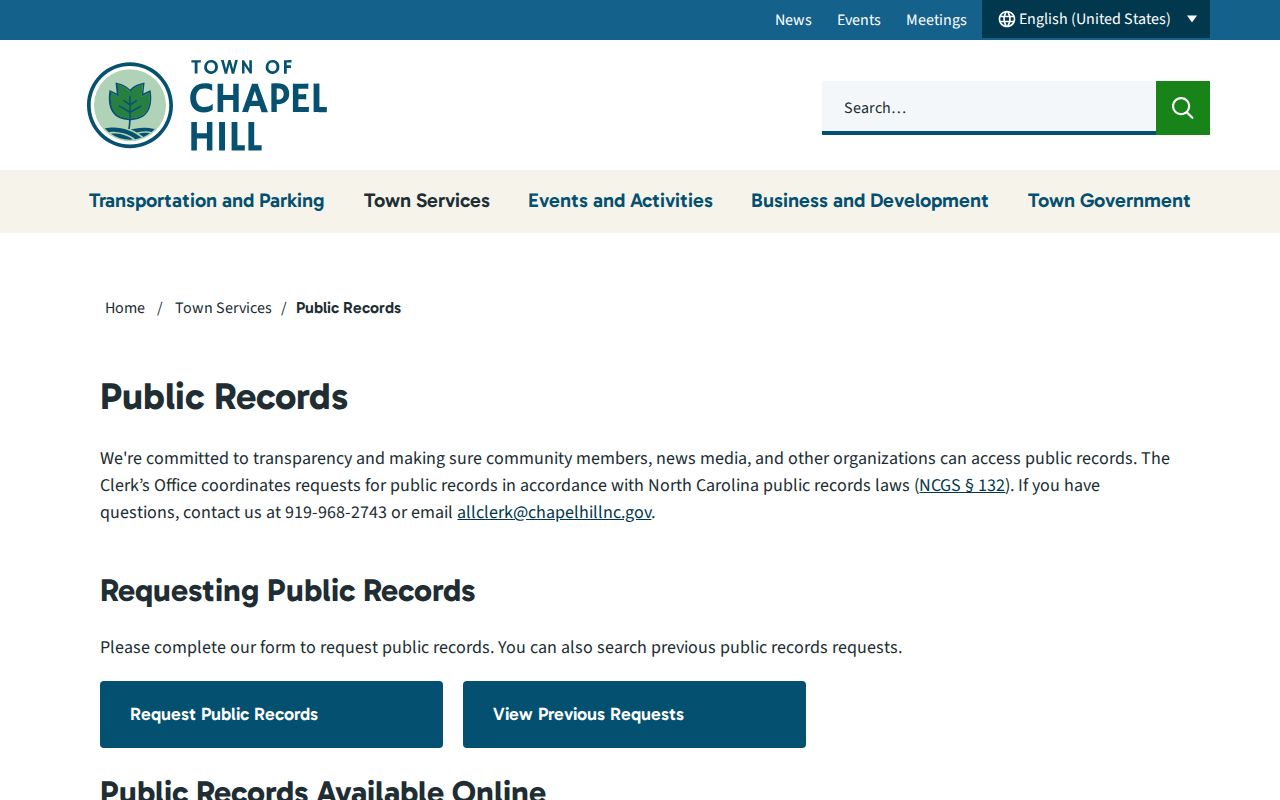
Most electronic production is free. Published charges include 18 cents for a black-and-white copy, 24 cents for a color copy, $4.25 for a flash drive, and $25 per hour plus copies when research exceeds four employee hours.
Chapel Hill Criminal Data Context
CHPD's semiannual reports are the official source for local crime and community-engagement trends. The Census QuickFacts estimate places Chapel Hill's July 1, 2024 population at 64,028, which helps explain its role as Orange County's largest municipality. Police measures must still be read by label. Calls for service, incidents, offenses, arrests, and convictions are not interchangeable. One call can produce no report, one report can include several offenses, and one arrest can lead to amended or dismissed charges.
When comparing periods, use the same measure and reporting series. Then check eCourts for the disposition of a specific case. This two-source method avoids turning citywide counts into claims about one person or treating an arrest total as a conviction total.
Public Access Rules
North Carolina law gives access by record type, not by a blanket promise that every police file is open. Under G.S. 132-6, a requester generally need not state a purpose and should reasonably identify an existing record. Core incident and arrest facts can be public even when investigative narratives, witness details, juvenile information, or protected identifiers are withheld. Court records are open through the Clerk unless another law restricts them. Expunged material is removed from ordinary public access.
Key Statutes:
G.S. 132-6 requires inspection and copies of public records at reasonable times and as promptly as possible.
G.S. 132-1.4 protects investigative material while making specified incident and arrest facts public.
G.S. 132-1.4A creates the special disclosure and release process for police recordings.
Ask CHPD for its report, UNC Police for a campus file, and the Clerk for the court case. Choosing the actual custodian is the fastest way to apply these Chapel Hill access rules.